
This post is also available in:  Español (Spanish)

1. Learning and growing together
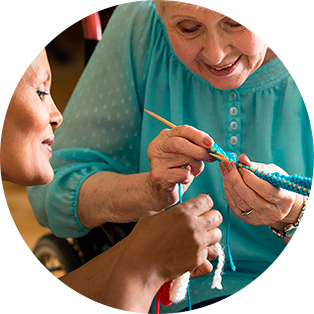
Our loved ones with Alzheimer’s or any other type of dementia can continue to enjoy their favorite activities and feel useful. One way is by sharing skills with others. Clarita, a 90-year-old Alzheimer’s who is in our care, loves knitting blankets. Clarita, has begun to enjoy teaching her nurse to weave, and now the two are entertained by weaving blankets together. 
2. Keep simple pleasures
The key to maintaining the happiness of our loved ones is that they can continue doing the activities they are accustomed to.
As expected, their physical abilities will change, so it will be difficult for them to continue with the activities they were accustomed to, however, with certain simple adjustments, they can maintain their independence, dignity and very important to feel useful.
A good example of this is the story of a patient who was a jumping rider and now can no longer ride a horse, but is happy going to the racetrack.

3. A little spontaneity
Usually when caring for someone, they maintain routines, mainly with the aim of creating a family environment, especially when they suffer some dementia or physical limitation.
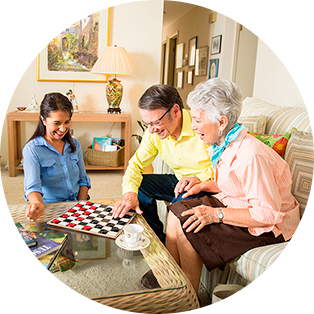
However, often, insisting on imposed routines can create boredom and a sense of dependency. For this reason, incorporating flexibility and spontaneity could reincorporate emotion into life. A good example is to offer alternatives, invite a friend to a short visit, walk another route or suggest playing a new game.
4. Maintain a “yes I can”
The simple fact of focusing the activities of our loved ones on their strengths and abilities, and not on their limitations and insecurities, makes a great difference in their quality of life.
Talking with them about their aspirations, goals and experiences is important in order to discover creative ways for them to happen.
Carlos, for example, became ill and had difficulty performing his usual daily activities. Staying at home provoked anxiety and loneliness. His nurse found a nearby coffee shop where they could go daily, read the newspaper, and converse with other people.
Already Carlos could not leave as he had before, but together with his nurse found a way to feel empowered and active social life.
5. Observe
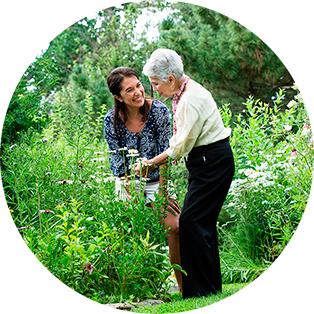
It really is important to listen and observe any signs that indicate that our loved ones are feeling alone or useless.
We must strive to identify what our loved ones really want. For example, Javier, a teenager with autism, the simple fact that he had responsibilities at home, made him feel more independent.
We ensure that nurses provide the best quality possible in the service, so that the patient feels that their desires are satisfied.
It is extremely enriching when there is empathy and when the caregiver and the patient work together to meet the needs of both.
 How satisfied are the daily activities of your loved ones?
Providing skilled care, through trained nurses, can make a difference in the independence, skills and abilities of the family member cared for.
Our approach to care is based on the philosophy of “Eden Alternative”, where the care of each client is personalized, as we watch to meet their tastes, preferences and needs. We seek to achieve together an ideal environment for the person to care for as well as his family.
Studies have shown that this makes everyone satisfied, the caregiver, the patient and their family. For more information you can go to www.edenalt.org.